Don't Replace It, Restore It: 5 Surprising Things You Didn't Know Could Be Saved (And How Much It Saves You)
Most people replace damaged interiors far too early.
A cracked leather sofa, a torn exam table, or a faded dashboard can look like a lost cause at first glance. Yet many of those surfaces are still structurally sound. What failed is the finish, the top layer, the color, or one isolated area of damage. Replacing the entire item often means paying more, waiting longer, and throwing away material that still has years of life left.
That is why interior restoration has become such a smart alternative. Color Glo has spent more than 50 years building a specialty around restoring leather, vinyl, velour, cloth, and hard plastics across residential, automotive, marine, aviation, and commercial settings. The company’s message is simple and persuasive: if the damage is localized, replacement may be the worst financial choice on the table.
Why interior restoration often beats replacement
Replacement sounds easy until the real costs show up. There is the purchase price, of course, but there is also shipping, labor, downtime, disposal, and the hassle of matching the original look. In business settings, replacement may mean taking assets out of service. In homes, it may mean parting with a piece that still fits the room perfectly.
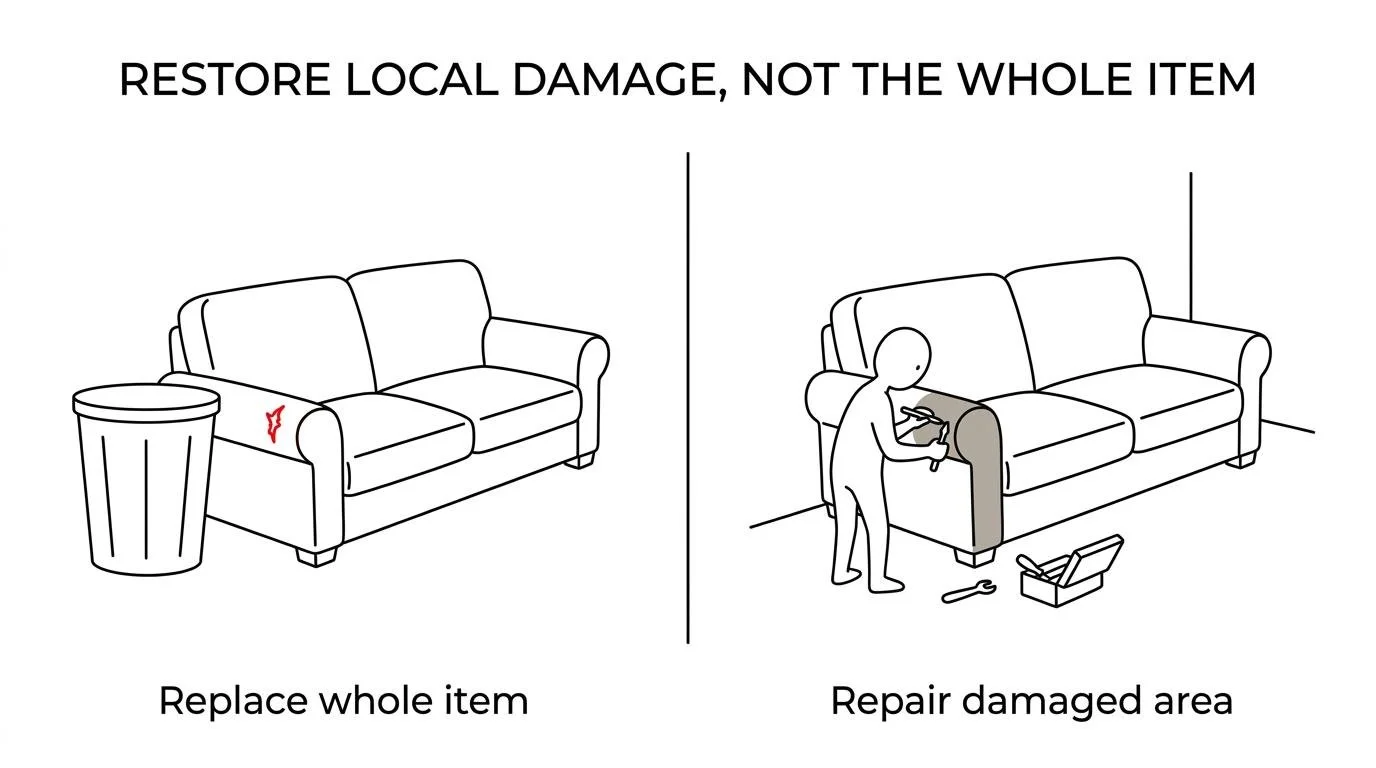
Interior restoration changes that equation. Instead of discarding an entire chair, booth, panel, or seat, skilled technicians repair the damaged section, rebuild the surface if needed, and color-match it to the surrounding material. Color Glo states that restoration can often cost up to 70 percent less than replacement, which is why the approach has appeal in both consumer and commercial markets.
The environmental case is just as strong. The U.S. EPA classifies furniture and furnishings as durable goods and reports that they generated 12.1 million tons of municipal solid waste in 2018. Of that, 80.1 percent was landfilled. EPA guidance also encourages repairing worn items rather than disposing of them, since waste reduction saves money, conserves resources, and cuts emissions.
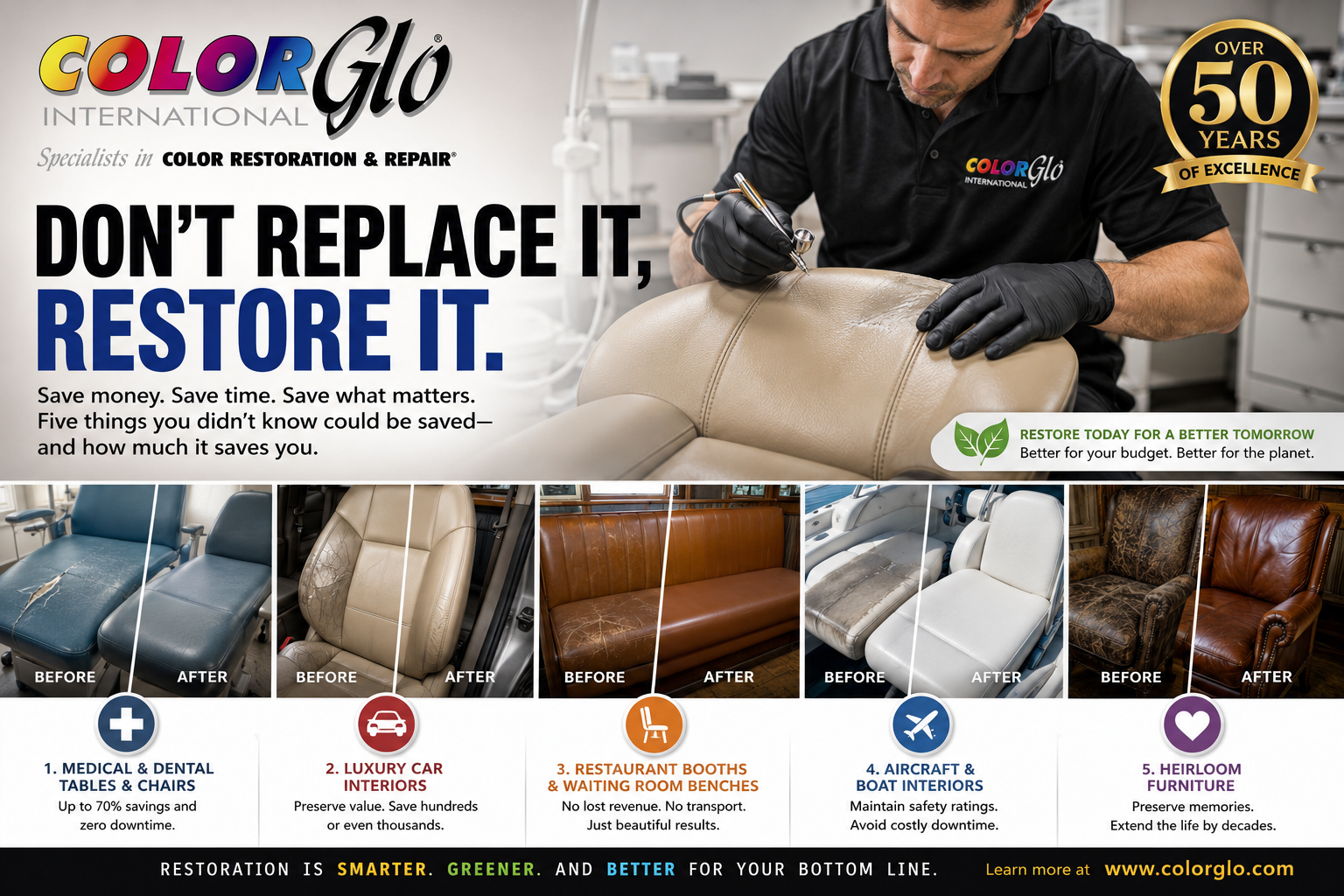
Medical Tables and Dental ChairsCommon reason people replace it: Tears create sanitation concerns What restoration changes: Repairs damaged vinyl on-site with non-porous finishes Typical savings impact: Often far below replacement cost
Vehicle InteriorsCommon reason people replace it: Cracked leather, faded plastic, scratches What restoration changes: Restores color, texture, and surface integrity Typical savings impact: Often hundreds to thousands saved
Restaurant and Lobby SeatingCommon reason people replace it: Peeling vinyl hurts first impressions What restoration changes: Repairs booths and benches during off-hours Typical savings impact: Avoids lost seating revenue
Boat and Aircraft InteriorsCommon reason people replace it: Sun, moisture, wear, strict standards What restoration changes: Restores cabins while preserving performance requirements Typical savings impact: Reduces downtime costs
Heirloom FurnitureCommon reason people replace it: Fading, drying, splits, sentimental damage What restoration changes: Extends life while preserving character Typical savings impact: Value goes beyond purchase price
Five surprising interior restoration projects that can be saved
The most surprising part of this industry is not that restoration works. It is how many categories it touches.
Many people think only of sofas and car seats. The actual list is much broader, and the savings become even more compelling when the item is specialized, regulated, or hard to replace.
Medical exam tables and dental chairs restoration
In healthcare spaces, damaged vinyl is more than a cosmetic problem. A tear can create a porous area where fluids and bacteria are harder to manage, which raises sanitation concerns and can put staff in an uncomfortable position.
The default response is often to order a new table or chair. That can mean high capital expense and long wait times, especially for manufacturer-specific equipment. Restoration offers a faster path. Color Glo describes on-site repair methods that address the damaged surface and return the vinyl to a non-porous, service-ready condition without removing the entire unit from use.
For clinics and practices, the savings go well beyond the invoice.
Cost control: avoids buying a full replacement unit
Operational continuity: keeps rooms available for patients
Safety and appearance
Compliance support: damaged surfaces do not linger in service
Automotive leather seats and plastic dashboard restoration
Automotive interiors are punished by sunlight, friction, keys, spills, pets, and everyday use. A single cracked bolster on the driver’s seat or a scratched dashboard panel can make the entire cabin feel worn out.
Dealerships and vehicle owners often assume replacement is the only way to regain a factory look. Yet specialized interior restoration can repair leather, rebuild damaged areas, and match the original color and sheen on hard plastics and trim. That matters in daily drivers, lease returns, collector vehicles, and dealer inventory alike.
A restored interior also protects resale value. Buyers notice cabin condition immediately, and visible wear invites discounting. A well-repaired seat or dash can preserve the impression that the vehicle has been cared for from bumper to bumper.
Restaurant booths, waiting room benches, and hospitality seating restoration
Commercial seating wears out in public. Guests slide in and out, cleaning chemicals are used constantly, and high-turn environments magnify every split, scuff, and faded edge.
Replacing booths or lobby benches creates a chain reaction of extra costs. Furniture may need to be removed, transported, reupholstered, and reinstalled. Sections of a dining room or waiting area may be unusable in the meantime. Color Glo positions its mobile service as a practical answer here, with on-site work performed where the furniture already sits.
That is why restoration is so attractive in customer-facing spaces.
Lost seats mean lost revenue
Transport adds cost
Visual wear affects brand perception
Fast, on-site repair reduces disruption
Boat and aircraft interior restoration
Marine and aviation interiors sit in harsher conditions than most people realize. Boats deal with sun, salt, moisture, and temperature swings. Aircraft interiors must meet strict safety expectations while still presenting a clean, premium cabin.
That makes replacement especially painful. Downtime can be expensive, and specialty materials may have long lead times. Restoration helps operators keep assets in service while addressing tears, fading, scratches, and surface wear. Color Glo states that it works in aircraft and marine environments using water-based products designed for those demanding applications.
For owners, operators, and fleet managers, this is not just about appearance. It is about asset utilization. The cabin needs to look right, feel right, and return to use quickly.
Heirloom furniture and residential leather furniture restoration
Some pieces should not be replaced at all.
An older leather armchair, a family sofa, or a favorite recliner may carry years of history. The damage often starts slowly: fading at the headrest, cracking on the arm, dryness in the seat, a pet scratch along one panel. Over time, people assume the piece is simply too far gone.
Specialized restoration can reverse much of that visible aging. Color Glo’s furniture services include work on sofas, couches, recliners, loveseats, and footrests, along with re-dyeing and repairs for rips, stains, holes, pet damage, and wear. The value here is partly financial and partly personal. A restored family piece can stay in daily life instead of being pushed into storage or sent to the curb.
What specialized interior restoration actually involves
Good restoration is not a quick cosmetic cover-up. The better process begins with identifying the material, the extent of damage, and whether the issue is surface-level or structural. Leather, vinyl, fabric, and hard plastics all behave differently, so the repair method has to match the substrate.
Color Glo’s model centers on mobile technicians who come to homes, offices, and commercial locations. That on-site capability matters because many assets are awkward, expensive, or impractical to remove. Medical furniture, restaurant booths, vehicle interiors, aircraft seats, and built-in seating all benefit from repair where they already are.
A typical restoration workflow often includes the following steps:
Assessment: identify material type, wear pattern, and repair scope
Surface preparation: clean, stabilize, and remove compromised finish layers
Repair work: fill tears, rebuild texture, or bond damaged sections
Color matching: blend the repaired area to the surrounding material
Protective finishing: apply the final coating for durability and appearance
That process explains why interior restoration can produce results that feel surprising to first-time customers. The goal is not to disguise damage from across the room. The goal is to make the damaged section belong with the original surface again.
Interior restoration and waste reduction go hand in hand
There is a larger economic shift behind all of this. Consumers and businesses are beginning to question whether replacement should always be the default response to wear. The answer is increasingly no.
EPA guidance supports repairing worn goods as a direct waste-reduction strategy. That matters because many interior materials are not easily biodegradable, and many bulky items are expensive to haul away. When a sofa, booth, or exam table is restored rather than discarded, the waste stream shrinks immediately.
The environmental case is practical, not abstract.
Less landfill use: fewer furniture and interior materials discarded
Lower manufacturing demand: fewer new materials required
Reduced shipping burden
Longer product life: more years from items already in circulation
For buyers who care about sustainability, restoration is one of the rare choices that can look better on both the budget sheet and the environmental ledger.
Before you sign off on an expensive replacement invoice, stop and ask yourself: Can this be restored instead? Chances are, the answer is a resounding yes.
Why interior restoration stands out in franchise opportunity research
The same market forces that make restoration attractive to customers also make it appealing to people researching franchise opportunities. Interior restoration addresses a broad mix of needs across households, dealerships, healthcare offices, hospitality spaces, marine operators, and aviation settings. That customer diversity matters because demand is not tied to one narrow niche.
A service model built around repair also fits current spending behavior. Many businesses want to protect capital, keep locations operating, and avoid unnecessary replacement cycles. Many households want to keep quality furniture, luxury vehicles, or sentimental pieces in service longer. Those motives appear in every region of the country, which gives the category national relevance.
Color Glo’s established position adds another layer to that story. The brand is associated with more than five decades in specialized restoration and a service mix that spans leather, vinyl, fabric, upholstery, and hard plastics. For franchise prospects, that breadth signals multiple paths to local revenue rather than reliance on a single customer segment.
A few market traits help explain why this space attracts attention:
Recurring need: wear, fading, tears, and scratches never stop happening
Mobile service potential: technicians can work where the asset already is
B2B and B2C demand: clinics, dealerships, restaurants, homeowners, and more
Replacement avoidance: the value proposition is easy for customers to grasp
That combination is compelling because it turns a common frustration into a measurable business case. When people learn what can be restored, they often stop asking where to buy new and start asking how quickly a technician can save what they already have.

Contact Color Glo Anywhere Around the World
With a presence in over 50 countries and hundreds of locations across the United States, Color Glo stands as a global leader in interior restoration. Whether you’re a consumer seeking to revive your cherished furniture, vehicle, or commercial space, or an entrepreneur looking for a proven, home-based franchise opportunity, Color Glo offers unmatched expertise and support. Our certified technicians and franchise owners are transforming surfaces and lives every day—delivering sustainable solutions, exceptional value, and the confidence that comes from partnering with an internationally trusted brand. Wherever you are, Color Glo is ready to help you restore, renew, and build a brighter future.